Olushola Omogbehin
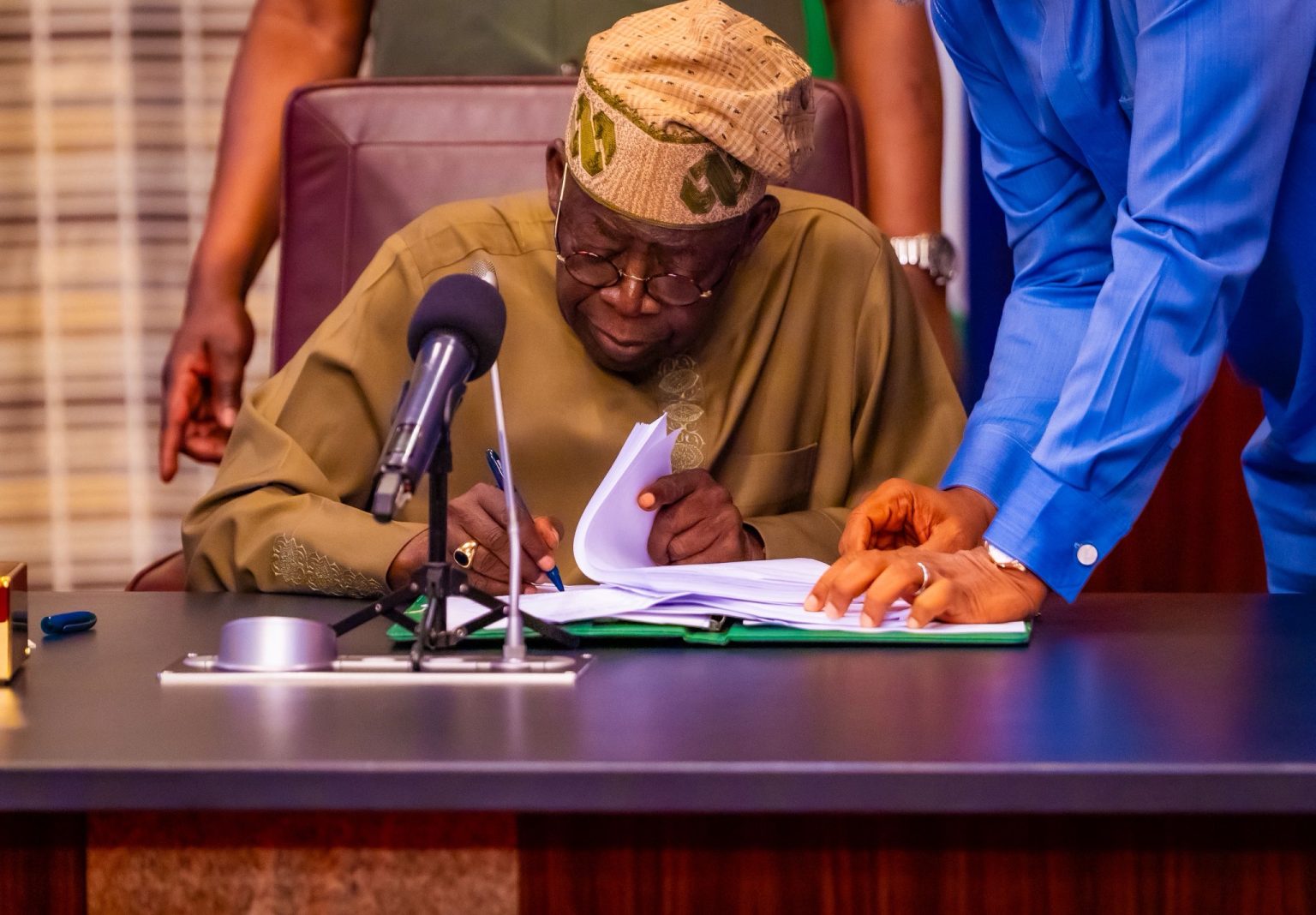
Despite opposition to the electoral Act 2026, President Tinubu has signed the Electoral Act 2026 (Amendment) Bill into law.
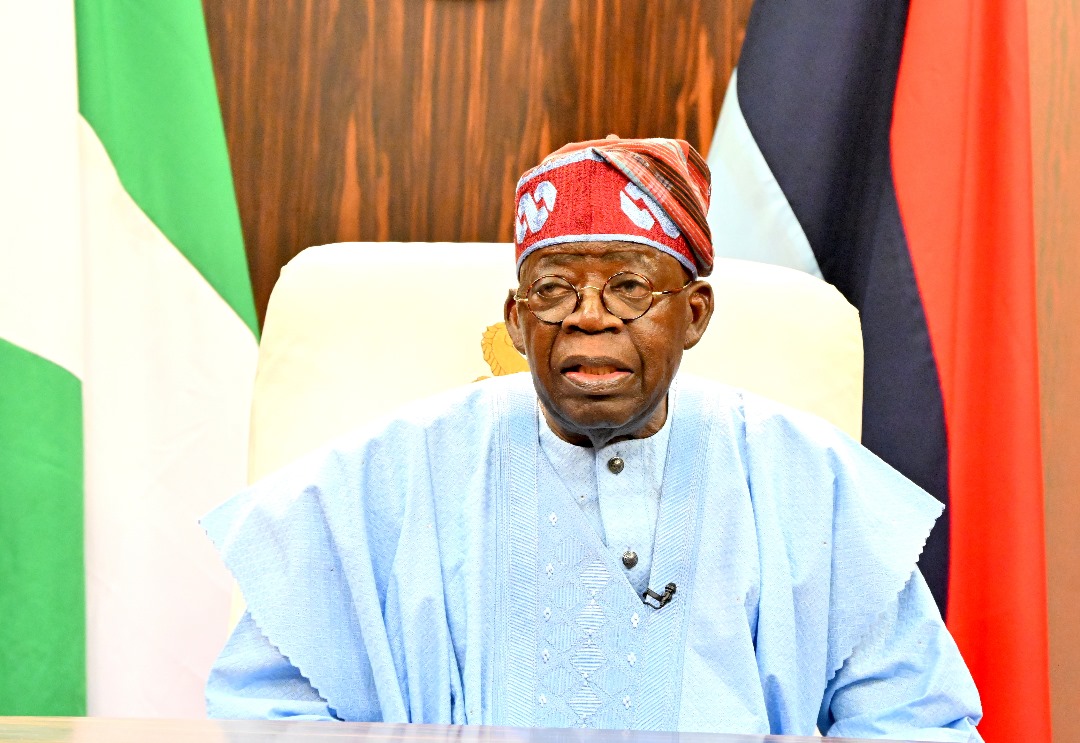
The signing ceremony was briefly held at the State House, Abuja, on Wednesday in the presence of principal officers of the National Assembly and senior government officials.
The signing set in motion the legal framework for the conduct of the 2027 general elections just days after the Independent National Electoral Commission (INEC) unveiled the official election timetable.
Speaking during the signing, Tinubu talked on the need for public confidence, saying:

“It is time that we will have confidence in our system. No matter how good a system is, it’s managed by people, promoted by people and results are finalised by people. In fact, for final results, you are not going to be talking to the computer. You are going to be talking to human beings, who will announce the results.”
On Nigeria’s technical readiness amid debates on real-time transmission, Tinubu said:
“And when you look at the crux of various agreements, maybe, Nigeria should question our broadband capability. How technical are we today? How technical will we be tomorrow? To answer the call of either real time transmission or not and as long as you appear personally as a manual voter in any polling booth, ballot paper is given to you, manually, you decide in a corner and fingerprint or thumbprint the person of your choice. You cast your vote without hindrance and any interference.
“Ballots are subsequently counted manually, sorted and counted manually. It’s just the arithmetic accuracy that is entered into form EC8A. It is still manually. Essentially, the transmission of that manual result is what we’re looking at and we need to avoid glitches. I’m glad you did, interference, unnecessary kicking in this age of you know, computer inquisitiveness.”
He finally assured Nigerians that: “Nigeria will be there. We will flourish. We will continue to nurture this democracy for the fulfilment of our dream for prosperity and stability of our country. I thank all of you very much.”
Meanwhile, opposition parties and civil society organisations have condemned President Bola Tinubu’s signing of the Electoral Act 2026 (Amendment).

They described it as a setback to Nigeria’s democratic progress and a legalisation of electoral malpractice ahead of the 2027 general elections.
According to the Peoples Democratic Party on Wednesday, the ruling All Progressives Congress’s fear of losing the upcoming elections was the reason for the hasty approval of the contentious legislation, which they see as a threat to the country’s democratic process.
At the ceremony, Tinubu raised concerns about Nigeria’s current broadband infrastructure and technical capacity to handle real-time electronic transmission of election results, even as he signed the Electoral Act 2026 (Amendment) into law.
Calling the development “a dark day for democracy,” the National Publicity Secretary of PDP, Ini Ememobong said:
“The hurried grant of presidential assent to the contentious bill, as passed by both chambers of the National Assembly, despite widespread opposition from Nigerians, confirms that this was a well-choreographed drama by the APC.
“The party’s fear of inevitable defeat in a free and fair election is palpable, and they can no longer conceal it. This is indeed a sad day for democracy.
“The Nigerian people have been dealt a bad hand, one that existentially threatens democratic governance. The President has demonstrated an inability to rise above partisanship in the art of governance.”
Coming after the Independent National Electoral Commission released the timetable for the 2027 general elections, the bill has generated intense debate, particularly over provisions for real-time electronic transmission of election results, a key demand by opposition parties, civil society groups, and election observers following widespread allegations of result manipulation during the 2023 general elections.
According to the Executive Director of YIAGA Africa, Samson Itodo, the bill is “a step backward rather than a reform.”
“First, this bill that was passed, it is an absolute missed opportunity for transformative electoral reforms because it fails to address critical gaps. It signals a regression.
“So, it is a reform in name and a regression in substance. I wish that the President had rejected the bill and asked the legislators to go and fix some aspects of the bill.
“When you look at electronic transmission of results, the provision adopted by the National Assembly is completely against what citizens demanded because what they have done is they have made the process more vulnerable to manipulation. So, I say that this particular bill signals a regression in substance. And we cannot call these reforms.”
The Executive Director of the Civil Society Legislative Advocacy Centre, Auwal Musa, offered a more measured perspective, acknowledging that while the law was not perfect, it provided a framework for future improvement.
“Well, as it is now, since the National Assembly and the President did not yield to the call by Nigerians to ensure that we have electoral law that is acceptable by us, improve the electoral transparency and boost confidence of Nigerians to even participate in the election, I think whatever it is, we just have to manage with what we have now.”
The plenary of the House was on Tuesday turned into a rowdy session over the bill as opposition lawmakers teamed up against their All Progressives Congress counterparts in demanding, among others, the electronic transmission of election results without a proviso.
Earlier, members of the ruling All Progressives Congress and other stakeholders expressed reservations about the technical feasibility of real-time transmission in areas with limited telecommunications infrastructure, advocating a phased or hybrid approach that would allow manual collation where electronic systems fail.