Olushola Omogbehin
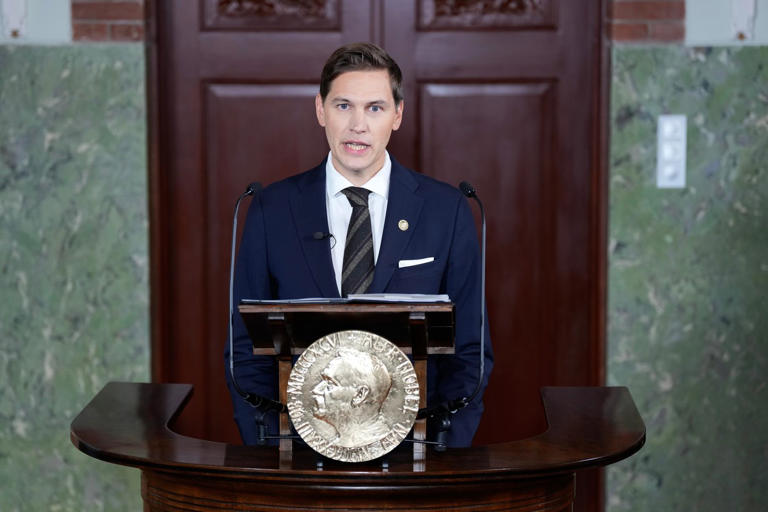
The 2025 Nobel Peace Prize has been awarded to Venezuelan political opposition leader Maria Corina Machado for her tireless work promoting democratic rights for the people of Venezuela and for her struggle to achieve a just and peaceful transition from dictatorship to democracy.”
Announcing the award on Friday, Norwegian Nobel Committee Chair, Jørgen Watne Frydnes, called Machado “a brave and committed champion of peace.”
He praised her as a “key unifying figure in a political opposition that was once deeply divided – an opposition that found common ground in the demand for free elections and representative government.”
“The Nobel Peace Prize for 2025 goes to a brave and committed champion of peace, to a woman who keeps the flame of democracy burning amidst a growing darkness at a time when democracy is under threat. It is more important than ever to defend this common ground.”
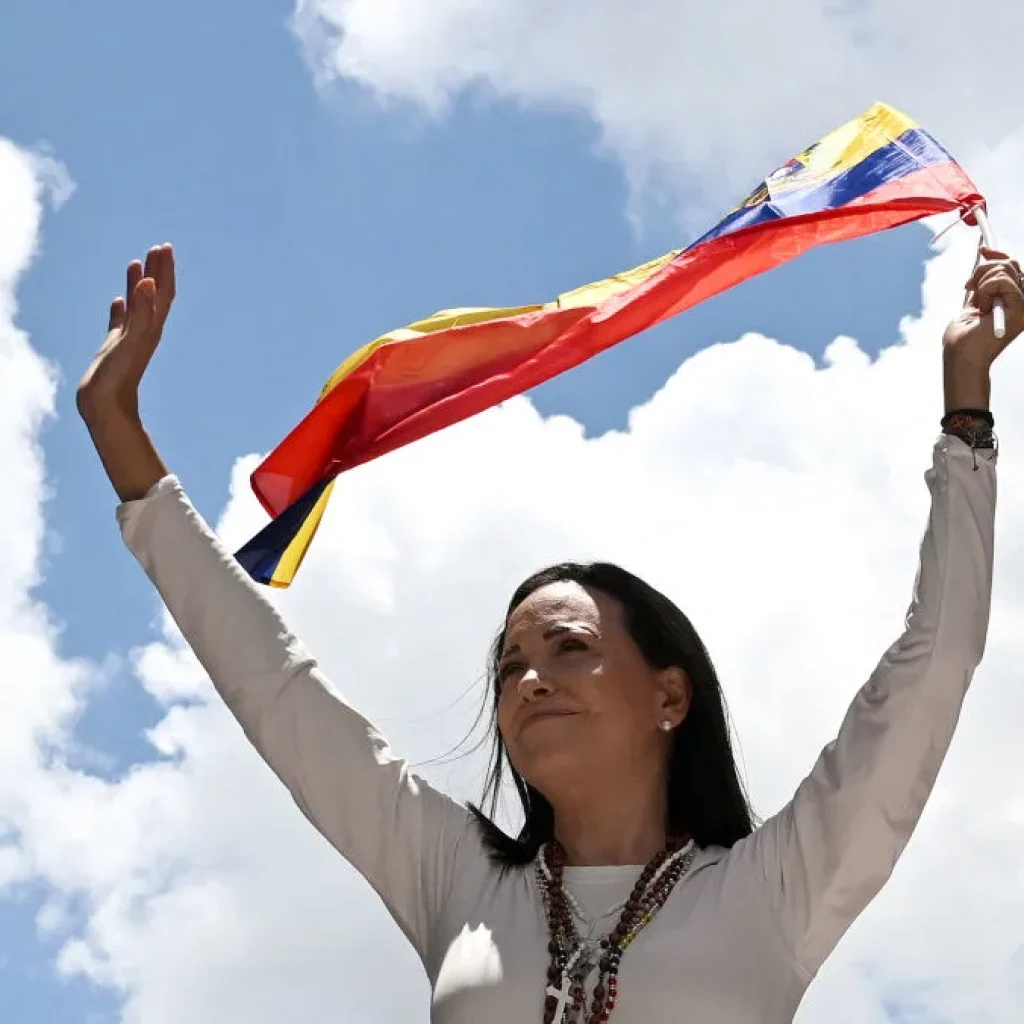
The committee said Machado was awarded the prize for her “tireless work promoting democratic rights for the people of Venezuela and for her struggle to achieve a just and peaceful transition from dictatorship to democracy.”
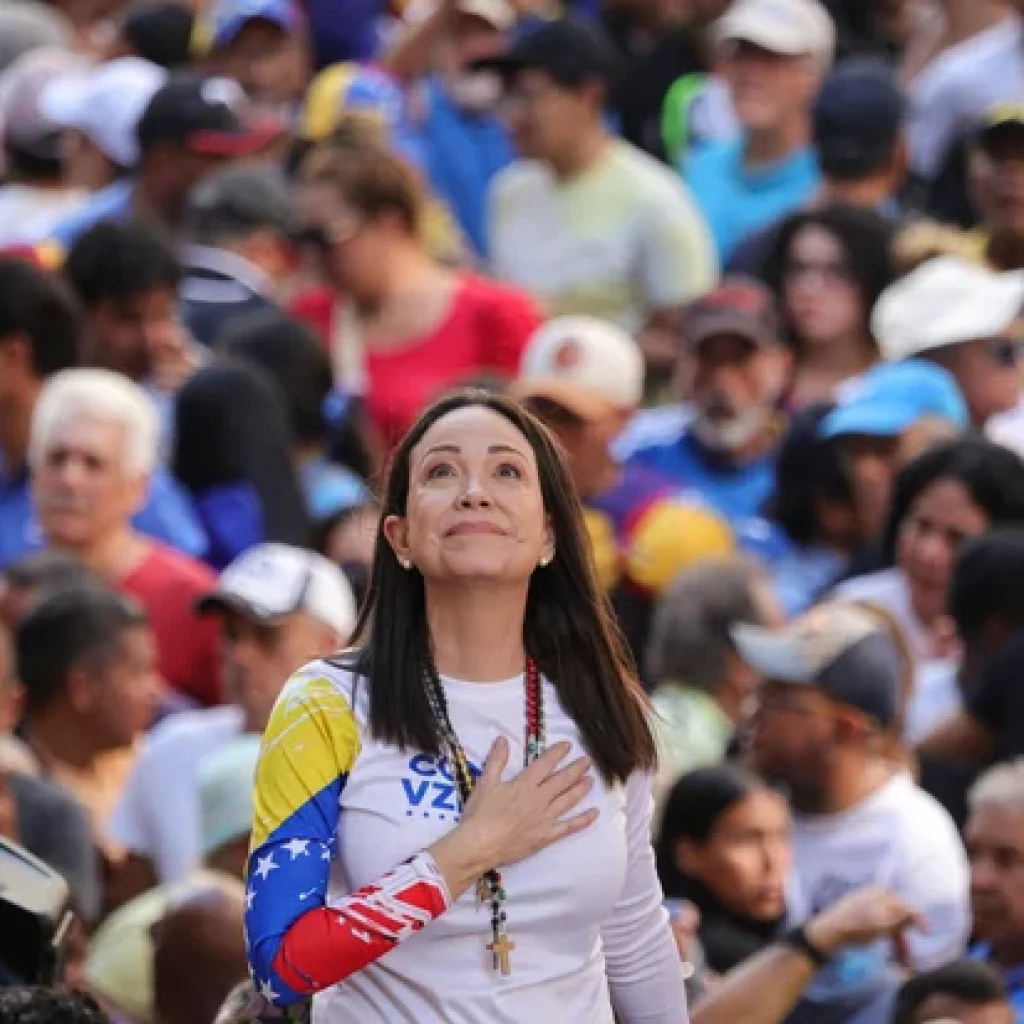
The 58-year-old industrial engineer, nicknamed as Venezuela’s “Iron Lady,” has led the opposition to the country’s authoritarian President Nicolás Maduro, whose last two electoral victories have not been recognized by a number of countries, including the U.S. In the country’s 2024 election, Machado emerged as the opposition’s central figure despite being formally barred from running for public office.
After winning the opposition’s 2023 primary with an overwhelming 92 percent of the vote, she was disqualified by the government’s comptroller, which accused her of administrative irregularities and barred her from holding public office for 15 years. When the ban was upheld, Machado named historian Corina Yoris as her stand-in candidate—a move widely seen as a protest against Maduro’s tightening control over Venezuela’s electoral system. In recent years, Machado has been forced into hiding to protect her safety.
The Nobel Peace Prize was founded by Swedish industrialist Alfred Nobel, who established in his 1895 will that it should go to a person who has done “the most or the best work for fraternity between nations and the abolition or reduction of standing armies and the formation and spreading of peace congresses.”
Past recipients include Nihon Hidankyo, a Japanese grassroots organization that advocates for nuclear disarmament, took home the Nobel Peace Prize “for its efforts to achieve a world free of nuclear weapons” in 2024; Yasser Arafat, Shimon Peres and Yitzhak Rabin in 1994; Henry Kissinger and Le Duc Tho in 1973; and Martin Luther King Jr. in 1964.
Each year’s laureates are chosen by the five-member Norwegian Nobel Committee, appointed by the Norwegian Parliament. The committee evaluates nominations from qualified proposers—such as heads of state, national legislators, professors in relevant disciplines, past laureates, and directors of foreign policy or peace institutes. Nominations must be submitted by January to be eligible for the same year. You are not allowed to nominate yourself, according to the committee.
Winners receive a medal, diploma, and 11 million Swedish kroner, which is worth around $1 million. The award ceremony will be held in Oslo on Dec. 10.
Earlier this week, four other Nobel prizes in physics, chemistry, physiology or medicine and literature were awarded while the prize for economic sciences will be announced on Monday.