…African AI shouldn’t try to copy the blueprint of western tech. innovation lies in constraint driven engineering and building lightweight high impact system that work flawlessly when infrastructure is tough. We can start building for Africa in Africa so we don’t have to ship what is being built by the western world to Africa because they don’t 100% fit for the African ecosystem. With cultural diversities in Africa, we need to build AI that can actually understand who we are, understand our problems and from there we can start making impact globally.
Olushola Omogbehin
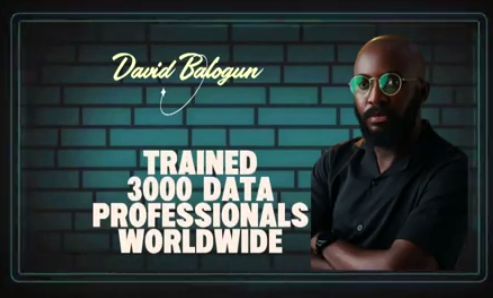
Artificial intelligence is rewriting the global economic playbook. But while the west builds massive data centers and Silicon Valley debates trillion dollar computation, a quiet revolution is taking place right here in African continent. Nigeria’s tech ecosystem has crossed major valuation benchmarks driven by booming fintech and digital infrastructure. The country has also scaled its 3 million technical talent initiative to position her as a major exporter of tech skills as strict safety, transparency and bias audit compliance rules are now legally enforceable for global tech firms. Medical regulators have approved the first fully autonomous AI system to independently diagnose medical conditions while tech giants have deployed small modular reactors to meet massive AI computer energy demand. In his interview with Dapo Aruwajoye on TECHNYFIRE, a programme on TVC, David Balogun, a data scientist, lead analyst and AI researcher who lives at the intersection of business strategy and high impact machine learning, helps us to navigate the metrics. He has over six years experience building financial analytics models. He has also trained over 3,000 data professionals worldwide and he’s taken African grown AI research all the way to the University of Cambridge this year. Excerpt.
Please, let’s get to meet you. who exactly is David? I did a little introduction of you, but let’s hear from the horse’s mouth?
Thank you so much, my name is David Balogun. I have been in the data space for a couple of years and have had the opportunities of working across the fintech space, the tech space, renewable energy space and other sectors within the tech industry. I am also AI researcher and I have a couple of amazing published and yet to be published researched papers. I am also into mentoring and coaching and I have had the opportunity of mentoring and coaching over 3,000 people across and beyond Africa. I am also someone who is driven by impact.
You build predictive cash flow models for fintech and also AI that can detect crop or diseases. So, tell us about it?
In one of the first fintech companies I had worked with, because of our kind business which has to do with disposing of cash, we had to build a model which can help us predict the accuracy of the disbursement and payback time of our customers so that we don’t lose our return on the money. So, after putting the model into perspective, we were able to make exact disbursement and know what our return on interest is going to be and it was very amazing.
Also on crop disease, two to three years ago, I spoke with a friend who was then working on a major project. He was trying to build something around crop detection so as to be able to use images to detect diseases across crop. Outside the conversation, we had a project to work on which took us about three month. Recently, I had a conference where I was privileged to write about being able to track disease with crop images using deep learning. Basically, what we did was to put that into a research perspective and then practical approach. This means that farmers in small scale farming can make use of these applications to detect crop disease and also mitigate risk against it. Knowing full well that the world lives on food, I don’t have to go to farm, you don’t have to go to farm but we literally eat and get our food produce from the farm.
How did you move from money into agriculture?
It is all about problem solving. When you are able to solve problem, money would come which is in turn tied to value. So, everything will eventually end in problem solving because in as much as we are all in AI ecosystem, food will remain an important solution. Having or putting proper infrastructure towards it would reduce numbers of disruption to our plant produce.
How do you convince a farmer in the village that using application can help him to prevent crop disease?
From the research we did and the paper I presented at the University of Ibadan, one of the major issues we saw was that 40% of farm produce are being destroyed on yearly basis across West Africa, East Africa and Africa at large. One of the things we sell to them is that we are solving XYZ problem for you. Since it is economical, many of them will buy into it because at the end of the day, the instances of pest destruction will be reduced.
So, if you are planting let’s say 100 crops and 40% to 50% had been destroyed because of pest, it is not a good business deal and no one will be willing to invest in agricultural space. So when those problems are being solved, we would then open way for investors to keep coming into the agricultural space.
Tell me about your trip to the University of Ibadan, what did you take from there?
The paper we delivered was using deep learning to solve crop diseases. One of the major take away from the conference was that the problem is being recognized. So, putting it out there for implementation so that everybody will be aware about the solution and implement it for their business is what we are now working towards. People were trying to pitch some other problem through their research paper with many other things to show that African ecosystem is also coming to the centre of the world. It showed clearly that we are not left behind in the whole conversation of data and technology.
So, which of these two actually represents the future of tech in Africa, Fintech of Agrictech?
Fintech already has a track record of doing well but the agric space is still very evolving. Another thing that must be mentioned is that a lot of investment is going into fintech space compare to agric space. In agric space, there is need for investors to come in but because of some of these issues, they are not willing to come. So, I would say fintech is growing and you know it is doing well but if opportunity is being given to agric space, it would make similar progress that fintech is making.
Your edge AI research is going to Cambridge this year. I know you are excited, tell us about it?
We work on data collection and pipeline, computing, cloud computing and other things. I have three co-authors, one is a professor of AI system from Olabisi Onabanjo University and three other guys working on the project with me. The problem we are trying to solve is data collection process. There is this conversation that data is not well collated in Africa because of some abnormalities. We are trying to correct these abnormalities and also collect the data and showing that there is proper cloud infrastructure in putting in the data into implementation. So, that is what the paper is all about. It’s going to be a great conference.
When you present this paper, what is the biggest misconception about Africa that you want to shatter?
I think one of the major issues is going to be around data collection system or not having a proper synthetic means of collecting data. There is this believe that Africa don’t keep data. In as much as that is 100% true, Nigeria through the minister of communication, innovation and digital economy and Kenya are currently making great efforts to rewrite the story of data collection and there has been improvement so far but in as much as it is not 100% reliable yet, it is a work in progress. So, that is what we are trying to correct. AI infrastructure can come into Africa and can really do well if you have the right data. That is what we are trying to correct.
In a constraint, a resource constraint environment like power and internet, how possible can that be?
That is a major issue I would also say and one of the implications is that it slows down the pace of AI across Africa. I saw a post recently where someone was complaining that she works for a customer (I guess one of these companies in the western world) and they sacked her because of poor internet connection and I am sure every one of us has our fair share of that. So, something as simple as internet can be so frustrating. So, internet connection and light are the basic problems.
Solar is a recent development in this direction and to a large extent, many can still not afford it because of the whole heavy investment but there are some guys who are doing buy and pay later to help but so long these two problems are still in existence without being addressed, it will slow down the pace of AI across Africa and Nigeria in particular. However, if they two can be tackled, we will start leveraging on them and start building.
You have trained 3,000 data professionals, what is the biggest mistake an African that wants to learn date make when entering into the field?
One of the major mistakes I see people make is that they want to start learning the big thing and I also made that mistake too. I spoke to a mentor of mine some years ago who is now a partner at PWC, I told him I was moving into data analytical space. He asked if I can use excel but in my head I was like I am learning Python, I am learning pandas, what do I need excel for! Luckily for me, I stumble on a video by someone and I reached out to her for advice and she told me to go back to the basics. So, most time, people want to start learning the big stuff and leave the basic and most time, you need to learn the basic. For instance, if you want to build a house, you can’t start putting the roof in, you have to start from the foundation, you have to put the block and make sure the foundation is well laid.
So, when coaching your student across the world, what is the biggest advantage an African has over others?
From the place of pain and frustration, I have had instances where some of my students would tell me they are having issue with light and no internet connectivity. Sometimes, you just have to understand them because you were once in their position. Maybe you just send them money to buy data. In the western world, they have all these infrastructures and that give them the leverage of learning more. But for someone from Nigeria, coming from a place of pain and changing such pain to a good story is a major advantage Africans have over others.
Are we really being trained for local impact or just to pass remote job?
The two work hand in hand. In as much you are saying pass remote job, it should have impact also. No one would want to hire someone who does not have value. So, both work hand in hand. Make sure you have impact and also chasing money, chasing the good job but most people are actually moving towards the remote job because it makes your life comfortable.
Silicon Valley assumes everyone around there has problem with internet and problem with power. So, to break through with AI in African continent, what is the first thing to break?
The first thing we have to do is to solve the basic problems. I will take this back to the question of the mistake most people make when they are trying to start their journey as data scientists. One of the major mistakes I said was that they don’t want to learn the basic stuff. So, we have to fix the basic issues like light, internet which is generally bad and make it affordable. A friend once told me that when you buy internet in their place in the western world, they use it for a month, it is unlimited but here in Nigeria, the reverse is the case. We also have to fix our data centre. If these issues can be fixed, you would see rapid growth in our AI ecosystem.
So, data sovereignty, we must have our own data, is that what you are saying? Do you believe in sovereign data?
I think last year, I spoke at a python conference and one of the topics I spoke about was data sovereignty. Who really own the data of Africa? One of the major highlights I am just going to repeat on that is that, let us try and localize our data. Let us try and build for Africa in Africa. We are not building for Africa in the western world; we are building for Africa in Africa. So, I want to build an AI product that someone in Ogbomoso can actually use and that is one of the issues with us. Let me give this illustration: Money and hand are three letter words (owo) and (owo) in Yoruba language with different pronunciation. AI tools can’t get and differentiate these but generalize them but building AI for ourselves will solve this problem.
So, data sovereignty has to start with us, we have to localize data to making sure everything had been put into context and not leaving everything for the western world to do and ship back to us. With due respect to everyone doing a bit of data notation, you will see companies hiring data people to do a bit of data annotation for them and all that but we have to start localizing our data. I spoke with a lady from Kenya some months ago who raise a question around it. The concern she raised was something around trying to access data which is a bit hard. People are sitting on a lot of data which should be made public. There is a part of data privacy whereby people do not want to release their data because some people do XYZ with it but there are rules everywhere with punishment attached. So, I appeal to government to have our data being made available for public use, for right use and not for any fraudulent and anyone using it for what is not right should be dealt with.

So, if that is being tackled, then we can start building for Africa in Africa so we don’t have to ship what is being built by the western world to Africa because they don’t 100% fit for the African ecosystem. We are just using them. With cultural diversities in Africa, we need to build AI that can actually understand who we are, understand our problems and from there we can start making impact globally.
And, as we own our data, we should own our tech also and we on this show clamour for sovereign innovation, we look at our technology speaking our language, do you think we are ready for it?
We are actually ready for it. One of the major blockers is funding because for you to build AI product that is well used, you must have enough resources but as you know in Nigeria, there is little to what individual can do without government intervention. There is need for government intervention in some areas of data collection because you can’t build a model 100% accurate or let’s say 90% if you are not feeding it with the right data.
But the big question is: is Africa ready for the global AI race?
We are 100% ready for the race if these issues being mentioned have been fixed. Already, we have been seeing a bit of implementation in that direction with a bit of product and services that have been launched that are AI driven. We just need to put some checks in place to making sure everything aligns.
Fintech, agric tech or logistics, where will the real African first African unicorn come from among these?
Let’s be honest, Fintech is like the big brother to every sector. So, I think it will likely come from fintech because of the infrastructures, road map and many innovations already in the sector due to the heavy investment thereto.
And now to a matter that concerns everybody, the brain drain, the japa syndrome. Is it affecting us, are we training people for the world or what do you think?
One major reason people are leaving the country is the fact that the ecosystem is not encouraging with the influenced of peer group pressure. So, the japa syndrome will continue so long other countries are opening their doors for talent and our government is not doing anything about it. But if we can fix some of these issues, there will be a lot of japada but most of the japada will come with generative idea because they must have seen some areas to improve in Africa.
What is the biggest lie that we have been told about AI in Africa?
I think the biggest lie they have told us about AI is that Africa don’t collect data. I am saying that because for you to have a good AI system or a good machine learning model, you must have a good data collection process, your data has to be accurate.
For someone listening today, your words of motivation?
Keep building; just keep building, that is the honest message. Anything you are doing, just keep building and be optimistic. You might not get it right now but just keep building and have the right set of people around you to inspire and to guild you. When you are in the gym and you are tired, you will encourage yourself, let me just go one more round, just that one more try can actually be the defining moment. It is no pain, no gain.
What is next for you? What is the big thing you are working on again?
I have a couple of other research papers I am working on. One is supposed to be at the 10th International Conference of Artificial Intelligence in London. Another one is in Babcock University in partnership with a university in Manchester. One of the goals I have is to make sure we have many researchers in Africa to be building and researching for Africa which we can leverage on to push Africa on the global map of AI.