Olushola Omogbeghin
President Bola Tinubu has commissioned newly upgraded health facilities and emergency-response assets across all six geopolitical zones.
According to a statement issued on Friday by Special Adviser on Information and Strategy, Bayo Onanuga, President Tinubu inaugurated a series of projects aimed at strengthening primary, secondary and tertiary care as well as emergency medical transport and supply‑chain capacity.
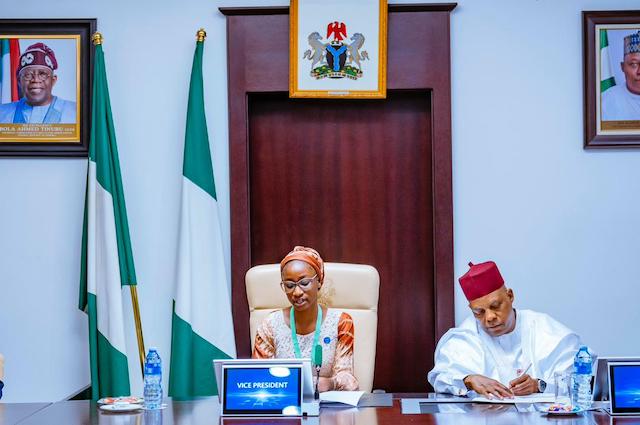
“We are determined to give Nigerians the kind of care that, for too long, only those who could travel abroad enjoyed,” Mr. Tinubu said during the virtual portion of the programme. “From the rivers of the Delta to the streets of Lagos, from rural Sokoto to tertiary Maiduguri, our emergency response system must work as one. Today, we put another major piece of that system in place.”
In Abuja, President Tinubu formally opened the Bola Tinubu Specialist Complex at the Federal Medical Centre, Jabi — a two‑storey specialist and VIP facility.
According to the Presidency, this hospital contains eight consulting rooms, twin theatre suites, dedicated Ophthalmology and ENT departments, a full laboratory, pharmacy, nine VIP wards, four general wards and a Private and VIP Clinic.
The President also flagged off the National Emergency Medical Service and Ambulance System (NEMSAS) Emergency Response Fleet at the headquarters of the Federal Ministry of Health and Social Welfare.
The fleet comprises 145 tricycle ambulances, six boat ambulances and 79 new emergency ambulances destined for federal tertiary hospitals, supported by 45 laptops, 20 printers and 320 mobile phones for the digital coordination platform.

It will operate under the SAVEMAMA programme, which the Presidency said is meant to deliver emergency obstetric and newborn care to underserved communities, including riverine, rural and hard‑to‑reach areas.
“We put another major piece of that system in place,” Mr. Tinubu added when launching the ambulances, underscoring the government’s focus on maternal and newborn emergency response.
He flagged off CNG‑powered ambulances for all 73 federal tertiary health facilities which was delivered under the Nigeria Health Sector Renewal Investment Initiative and empanelled by NEMSAS.
Those ambulances are intended to cut fuel costs, reduce emissions and strengthen referral links between secondary and tertiary hospitals.
In the North‑West, three Polio Emergency Operations Centres (PEOCs) were opened in Katsina, Kano and Sokoto. The Centres — expanded and re‑equipped after being established in 2013 with Gates Foundation support and managed by eHealth Africa. It will coordinate immunisation, disease surveillance and outbreak response in each state.
Kano’s PEOC sits at Muhammad Abdullahi Wase Specialist Hospital, Katsina’s at the SPHCDA premises on Murtala Muhammed Way, and Sokoto’s at the Epidemiology Unit of the Specialist Hospital on Sultan Abubakar Road.
North‑West and South‑South primary care: The Gadon Kaya Primary Health Centre in Kano’s Gwale LGA and the Aboh Primary Health Centre in Ndokwa East, Delta State, were commissioned under the World Bank‑supported IMPACT project, which the Presidency says has revitalised nearly 3,000 primary health centres nationwide over the past two years.
In the North‑East: A 50‑bed Mental Health and Drug Rehabilitation Centre at the University of Maiduguri Teaching Hospital was commissioned to serve patients affected by psychological and conflict‑related trauma in a region heavily impacted by insurgency.

The Lagos Immunisation Supply Chain Hub at the Federal Medical Stores in Oshodi, the first completed facility under Nigeria’s new Three‑Hub Immunisation Supply Chain Model, was opened to serve the South‑West and South‑South zones.
Under tertiary upgrades: President Tinubu also inaugurated a two‑storey Laboratory Complex at University of Uyo Teaching Hospital with 16 dedicated laboratories, seminar rooms and staff facilities; an Administrative Complex at University of Nigeria Teaching Hospital, Ituku‑Ozalla (commissioned through a hybrid virtual ceremony); and a Pharmacy Quality Control Laboratory at Ahmadu Bello University Teaching Hospital, Zaria, offering regulatory‑grade quality assurance operating to British and United States Pharmacopoeia specifications.
Federal Ministry of Health and Social Welfare showed that under the Nigeria Health Sector Renewal Investment Initiative, the government has revived nearly 3,000 primary health centres through the IMPACT programme, established 27 Comprehensive Emergency Obstetric and Newborn Care sites, and upgraded 1,602 Level 1 and 1,360 Level 2 health facilities across the six geopolitical zones in the past two years.