Olushola Omogbehin
The Nigerian Government has revealed a digital education data system that will track every Nigerian learner from primary school through tertiary education and the National Youth Service Corps (NYSC).
This is an initiative meant to end data gaps and to improve planning and reducing the number of out-of-school children.
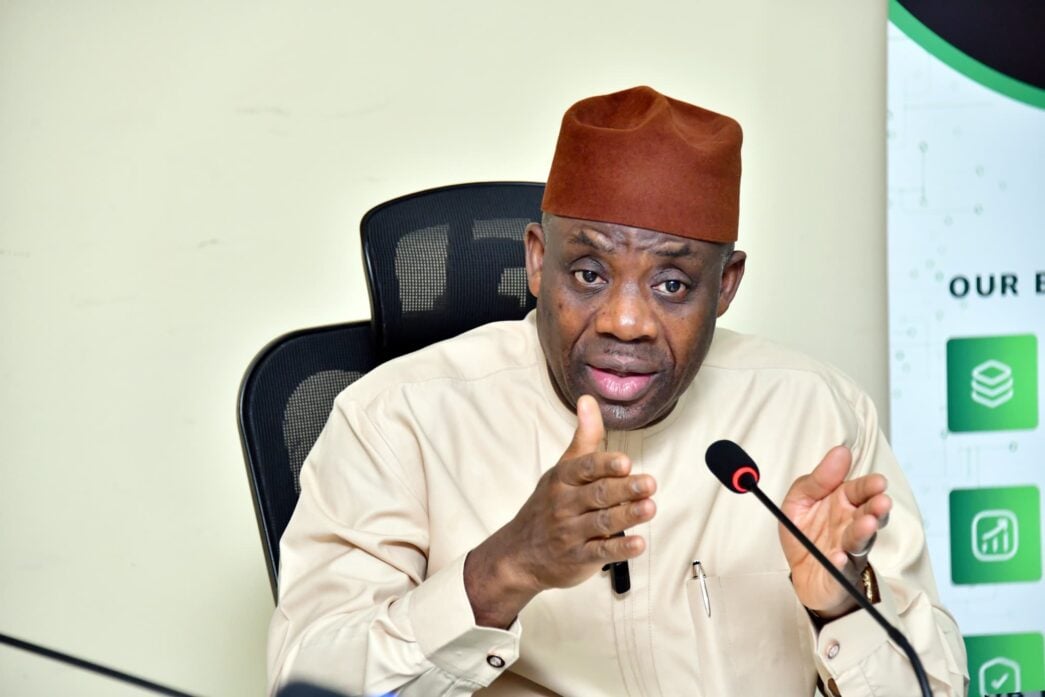
Minister of Education, Dr. Tunji Alausa, disclosed this in Abuja yesterday during the unveiling of the Digital National Education Management Information System (DNEMIS).
He described the platform as one of the most significant reforms ever undertaken in Nigeria’s education sector.

According to him, the initiative is designed to basically transform education planning, policy implementation, monitoring and accountability through real-time, evidence-based data.
The platform he said will digitise the Nigeria’s Annual School Census previously conducted manually. As well, it will for the first time, introduces a unique 16-digit Learner Identification Number (LIN) for every student in the country.
The identifier according to him would follow each learner throughout their educational journey, from primary school to secondary school, tertiary institutions and finally the NYSC, thereby creating a unified education record for every Nigerian student.
“We are not collecting data simply for record-keeping. We are collecting data to support planning, interventions and monitoring of outcomes. This is how evidence-based governance should work.”

The system he said, captures detailed information on learners, teachers, school safety, infrastructure and facilities, including classrooms, laboratories, computers, water and sanitation infrastructure.
Already, the minister said about 240,000 schools nationwide, including public, private, faith-based, technical and vocational institutions, have already been geo-tagged and assigned unique identification numbers on the platform.
He also disclosed that the Federal Ministry of Education is working with the National Identity Management Commission (NIMC) to harmonise the Learner Identification Number with the National Identification Number (NIN), in order to make the integration of education records with other government services easier.

Speaking further, he said “Whenever a child drops out of school, the system will immediately identify the learner, enabling government authorities to intervene quickly and return the child to school.
“This is one of the major strategies we intend to deploy to systematically reduce the number of out-of-school children in Nigeria.”
He said commissioners for education, State Universal Basic Education Boards (SUBEBs) and governors would now have access to credible data for resource allocation, infrastructure planning and policy implementation.
As the system will eventually integrate data from key education institutions, including WAEC, NECO, JAMB and NYSC, thereby enabling government to track students from basic education through graduation and into employment, the second phase of the initiative, would incorporate labour market intelligence to guide students towards courses aligned with available job opportunities and national workforce needs.