Olushola Omogbehin
Following the outbreak of Ebola in the Democratic Republic of Congo (DRC) and Uganda, the Nigeria Centre for Disease Control and Prevention (NCDC) has identified some states in Nigeria such as Lagos, the Federal Capital Territory (FCT), Rivers, Kano, Enugu, Borno, Akwa Ibom, Cross River, Taraba, and Adamawa as high risk of Ebola.
NCDC attributed the risk to increasing international travel, regional population movement, porous borders, and uncertainty surrounding the full magnitude of the outbreak.

In a national public health advisory addressed to Commissioners for Health across the 36 states and the FCT, the NCDC warned that Nigeria must urgently strengthen surveillance, isolation capacity and infection prevention systems as the virus spreads across parts of the Democratic Republic of Congo and Uganda.
Already, the World Health Organisation (WHO) has declared the outbreak a Public Health Emergency of International Concern (PHEIC), which according to NCDC underscores the urgency for immediate nationwide readiness before any suspected case is detected in Nigeria.
Although Nigeria has recorded no confirmed case, the agency said its Dynamic Risk Assessment, conducted with partners after the WHO declaration indicated that the country faces a “high risk of importation” as a result of regional transmission, international travel, porous land borders, informal crossings and trade routes across West and Central Africa.
The advisory body said about 1,077 suspected cases and 247 deaths have already been reported in the Democratic Republic of Congo and Uganda, with a case fatality rate as high as 24.6 per cent.

“The overall risk of importation of the disease into Nigeria has been assessed as HIGH due to increasing ongoing regional transmission, international travel, regional population movement, major airports, seaports, porous land borders, informal crossings and trade routes.
“The immediate objective of our national preparedness and readiness efforts is to ensure that every State and the FCT can reasonably detect, contain and respond swiftly to any suspected case while protecting health workers and sustaining essential health services,” it said.
Grouping the country into three preparedness tiers based on exposure routes and likelihood of importation, the agency classified Lagos, FCT, Rivers, Kano, Enugu, Borno, Akwa Ibom, Cross River, Taraba and Adamawa as high-risk states due to their international airports, seaports, major trade corridors, porous borders and heavy population movement.
NCDC also classified Ogun, Nasarawa, Kaduna, Plateau, Kogi, Niger, Jigawa, Katsina, Bauchi, Ebonyi, Abia, and Bayelsa as states facing moderate risk.

NCDC said high-risk states must scale up readiness faster and more aggressively, particularly in surveillance, laboratory readiness and isolation capacity while all states are expected to maintain Ebola preparedness, the
It also appealed to health workers nationwide to maintain a high index of suspicion, saying that early symptoms often resemble malaria, Lassa fever and other common febrile illnesses.
“Health workers must not wait for bleeding before suspecting Ebola in any patient with compatible symptoms and relevant travel or exposure history,” the advisory warned.
Symptoms include fever, fatigue, muscle pain, headache, vomiting, diarrhoea, abdominal pain, rash, hiccups, unexplained bleeding and signs of shock, the NCDC said.
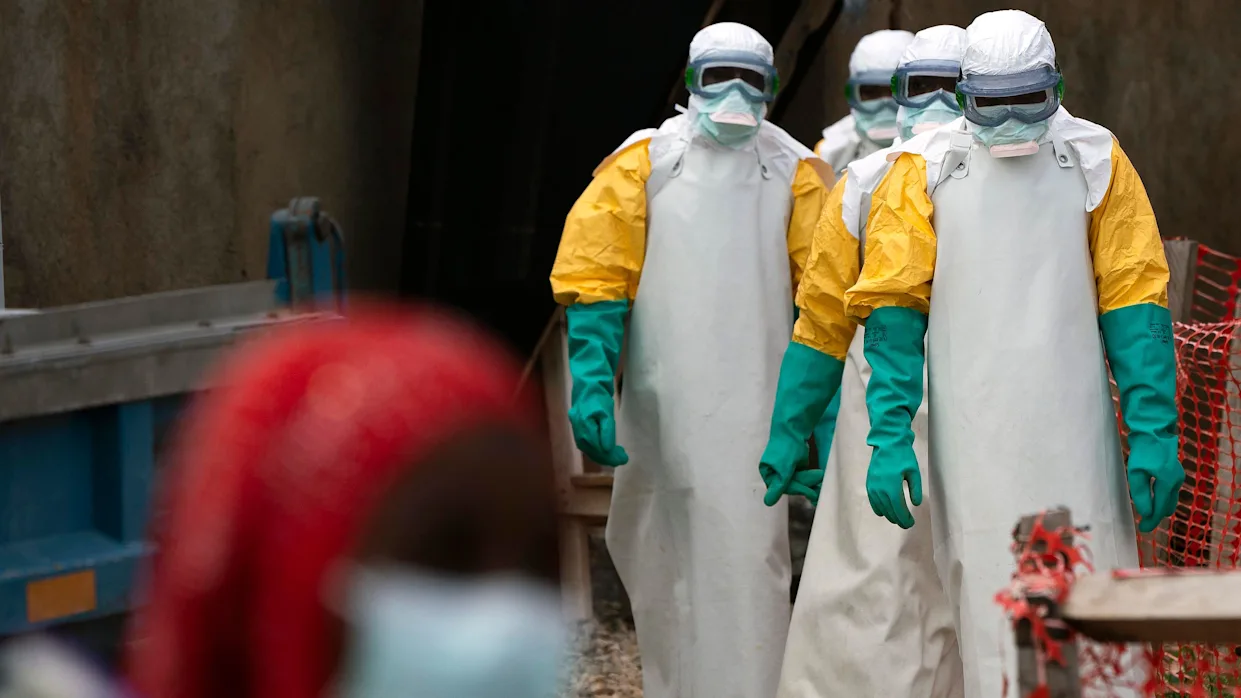
The agency confirmed that its National Emergency Operations Centre has been activated in alert mode to coordinate preparedness across federal and state levels, with emphasis on surveillance, infection prevention and control, case management, safe sample handling and risk communication.

State governments have been directed to ensure immediate operational readiness across both public and private health facilities, including contact tracing systems, isolation centres and healthcare worker protection mechanisms.
Preparedness efforts must prioritise early detection, immediate isolation, optimized supportive care, strict infection prevention and control, safe sample handling, contact tracing readiness, and public communication.
The NCDC assured that it is working closely with states and development partners to strengthen national preparedness and prevent any potential importation or community transmission of the virus.
The NCDC warned that sustained vigilance and funding will determine how effectively the country can contain any potential outbreak.